
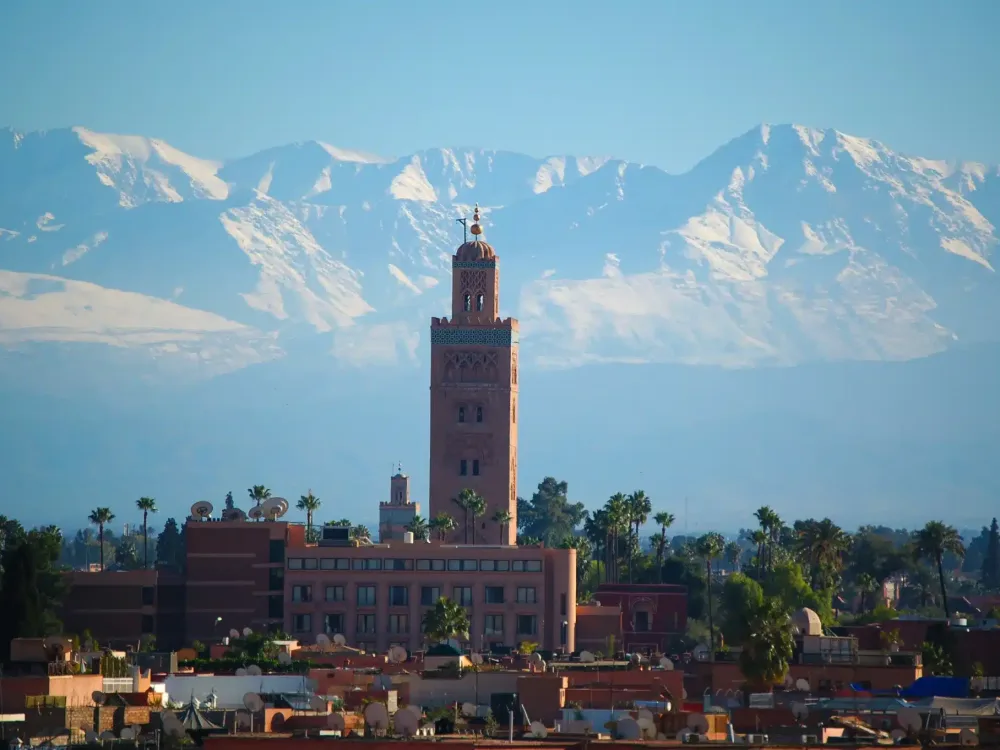
What are the imperial cities of Morocco?
There are traditionally four imperial cities in Morocco:
- Marrakech
- Fez
- Rabat
- Meknes
Why “imperial”? Because each of them has been the capital of the kingdom at some point in its history. As one royal dynasty followed another, these four cities were filled with palaces, mosques, madrasas and fortified walls, and grew into real centers of culture and power.
You might also hear about five imperial cities. Some lists throw in other places, like Casablanca, but that’s a tourist label, not history. Only Marrakech, Fez, Rabat and Meknes were ever capitals and home to a ruling sultan.
Each city has its own personality: Marrakech wins you over with its colors and energy, Fez with its history and medieval medina, and Rabat with its mix of modern life and heritage; Meknes is the quiet one, with a more laid-back, authentic feel. So how do you plan the perfect tour, and what can’t you miss? Let’s dive in.
The recommended circuit, city by city
Marrakech: the Red City of souks and palaces
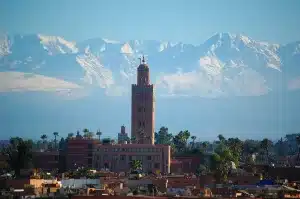
Marrakech is one of Morocco’s most iconic destinations, and it’s often where the imperial cities circuit begins. It’s nicknamed the “Red City” after the color of its walls and traditional buildings, and it’s a feast for the eyes.
At its heart is the medina, a UNESCO World Heritage Site. Think a maze of narrow lanes, craft workshops and souks piled high with spices, fabrics, ceramics and traditional Moroccan goods. The star attraction is Jemaa el-Fna, the city’s main square. Go at sunset, when it fills up with street performers and dozens of food stalls. The Bahia Palace and the Majorelle Garden are must-sees too, each showing you a different side of Moroccan history and design.
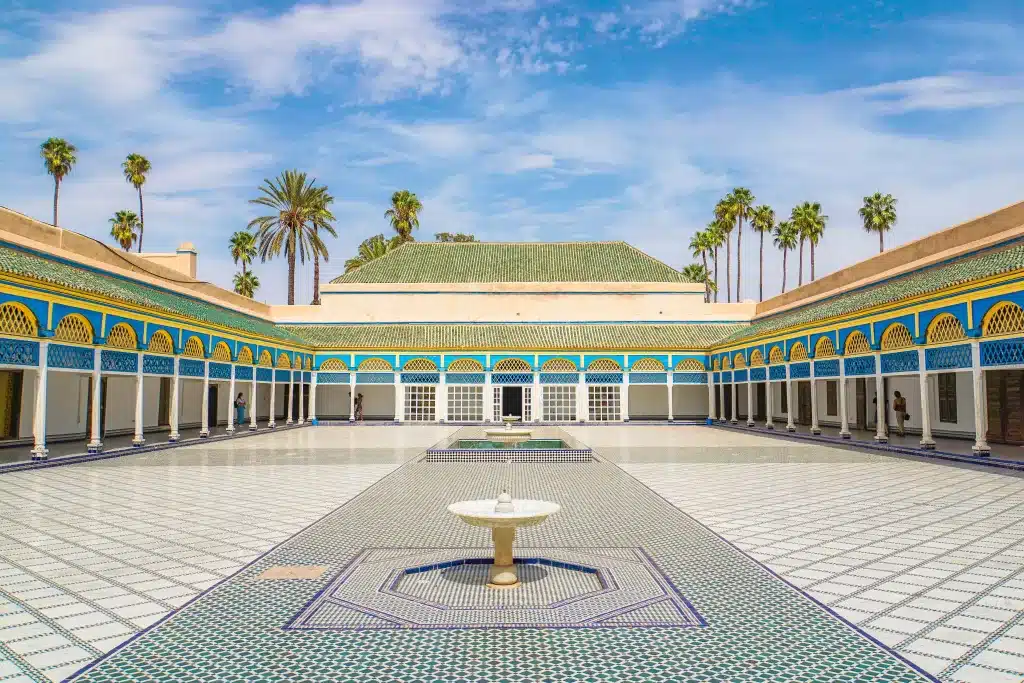
We recommend spending at least 2 or 3 days in Marrakech to really soak up its atmosphere.
Fez: Morocco’s cultural and spiritual capital
Fez still has a strong sense of its history, and it’s one of the most authentic stops on the circuit. Its medina, Fez el-Bali, is one of the largest and best-preserved medieval cities in the Islamic world, and a UNESCO World Heritage Site. Wander its lanes and you’ll feel like you’ve stepped back in time, past Quranic schools, craft workshops and traditional markets.
Top sights include the University of al-Qarawiyyin, often described as one of the oldest educational institutions in the world still in operation, the Bou Inania madrasa and the famous Chouara tanneries. Don’t skip the Royal Palace either, with its Blue Gate and 80 hectares of gardens.
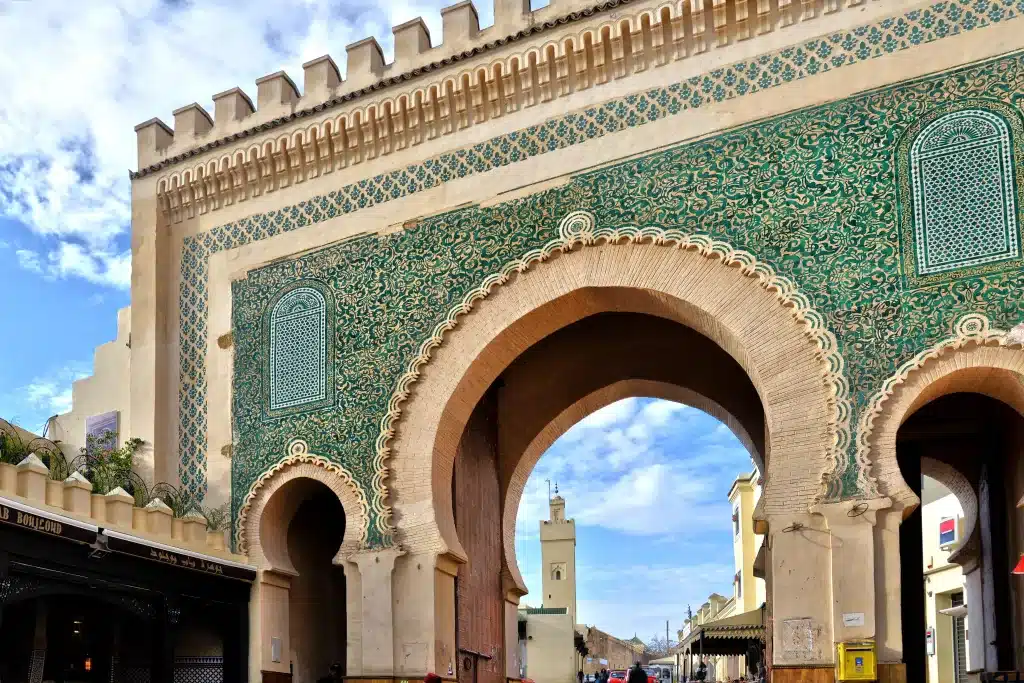
Compared to Marrakech, Fez is more about history and local tradition. Give yourself about 2 days to explore it at a relaxed pace.
Rabat: a modern capital with a historic soul
As Morocco’s capital, Rabat is the country’s political and administrative center, but it’s also steeped in history.
It’s calmer than Marrakech and Fez, but its monuments are just as significant. Its best-known landmarks are the Kasbah of the Udayas, a historic fortress overlooking the ocean, and the Hassan Tower. Make time for the Mausoleum of Mohammed V too, a great example of contemporary Moroccan architecture. UNESCO lists the city as “Rabat, Modern Capital and Historic City: a Shared Heritage”, a site that traces how Rabat has evolved over the centuries.
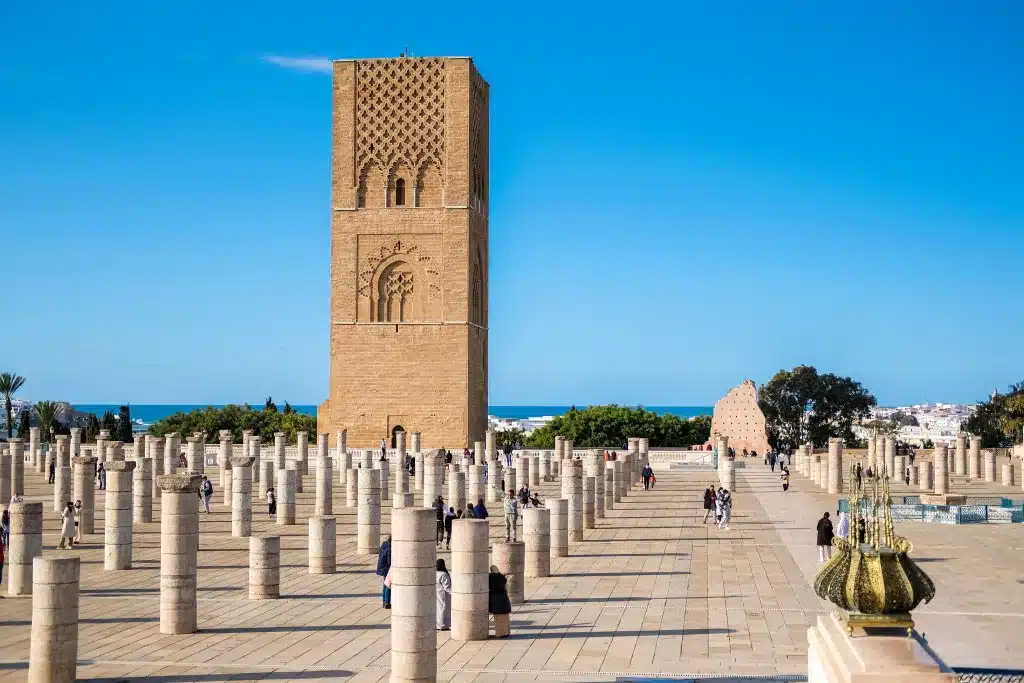
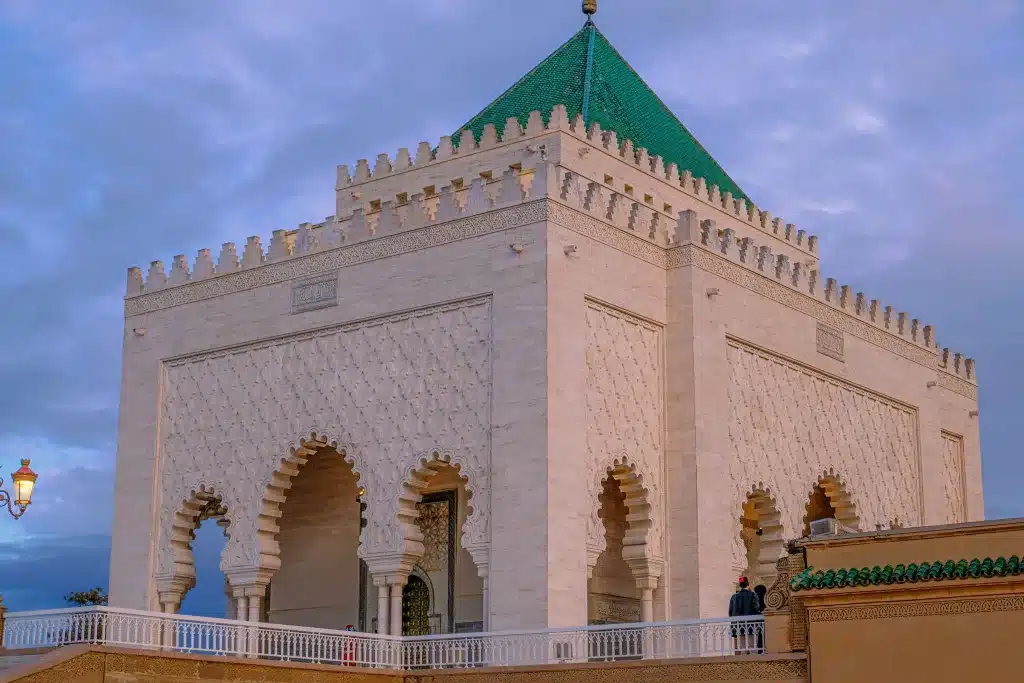
1 or 2 days is plenty for Rabat.
Meknes: the underrated imperial city
Meknes is probably the least crowded of the four, but don’t let that fool you: it’s packed with history and has a charm all on its own.
The city hit its peak under Sultan Moulay Ismail, who turned it into a grand imperial capital. That’s why it’s often called the “Versailles of Morocco“. Its most famous landmark is Bab Mansour, one of the most celebrated monumental gates in the country. The Meknes medina is also UNESCO-listed, and it’s a lot more relaxed than the busier stops on the circuit.
Just outside the city is Volubilis, an ancient Roman site and another UNESCO World Heritage Site, easy to reach from Meknes. With its ruins and mosaics, it’s one of the most fascinating archaeological sites in Morocco.
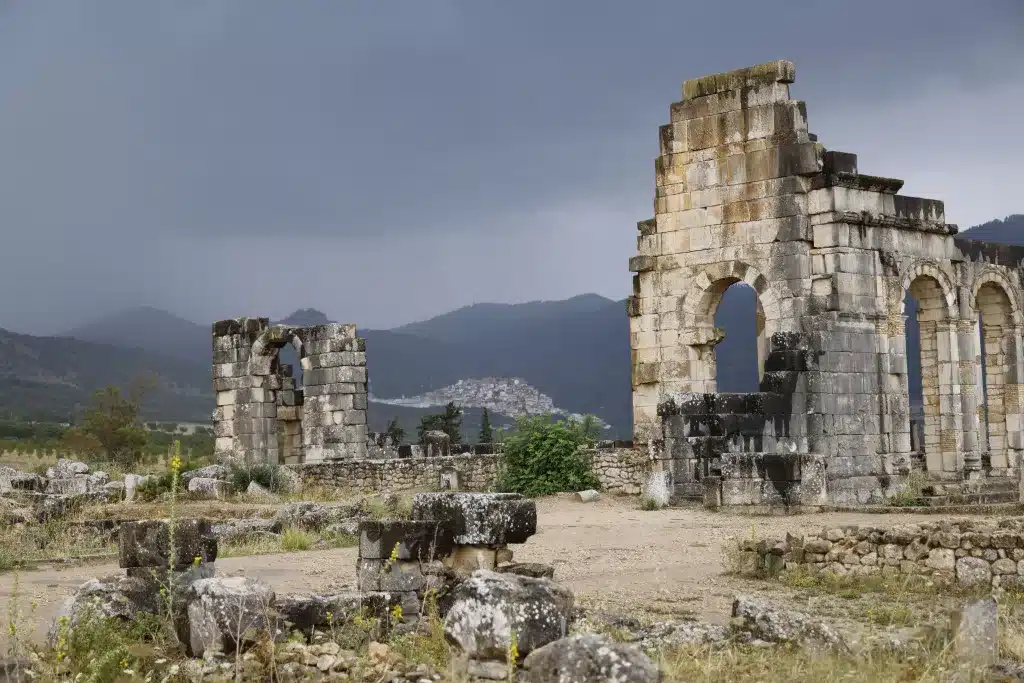
One day is usually enough for Meknes.
Adding the Sahara Desert
Want to take your trip up a notch? Add a few days in the Sahara to the imperial cities circuit. It’s one of the most unforgettable things you can do in Morocco.
The road to the desert usually takes in the Atlas Mountains, the kasbah of Ait Ben Haddou, Ouarzazate, the Draa Valley and Merzouga, the gateway to the Erg Chebbi dunes. From Marrakech, you’ll drive through some of the most spectacular scenery in the country. From Fez, the route runs through the Middle Atlas, Ifrane and the Ziz Valley.
Once you’re there, the options are endless. Spend a night in a desert camp, hike the dunes at sunset, try a camel ride, or just lie back and stargaze, miles away from any city lights.
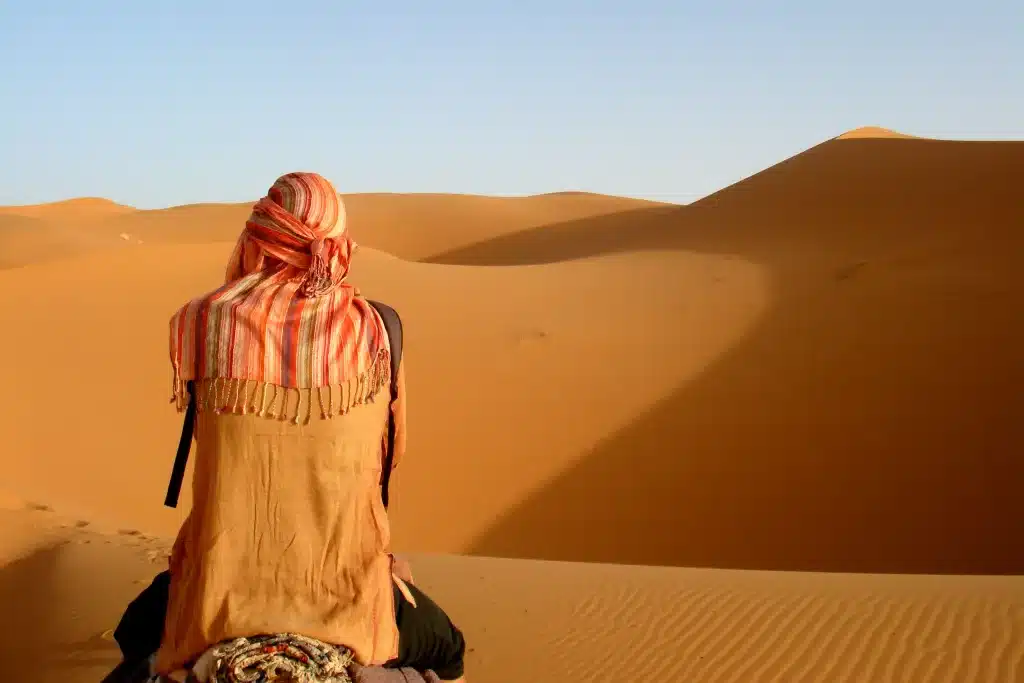
If you’re adding the Sahara to your imperial cities tour, plan for at least 3 or 4 extra days.
How to get online in Morocco during your tour
On a trip that takes you from city to city and out into the desert, an internet connection is really handy, if not essential! With a reliable connection you can use maps to find your way, translate signs and menus, and, most importantly, stay in touch with guides and locals.
The traditional option is to buy a local SIM in Morocco. It’s not always as simple as it sounds, though: you’ll often need to register it with your ID, aaand you may have to track down a store.
You could also use international roaming, but it’s by far the least convenient choice. Your carrier lets you use foreign networks while you’re abroad, but the rates can be sky-high. What about public Wi‑Fi? It can put your digital security at risk, and the connection is often patchy.
An eSIM is the quick, easy alternative. You pick a data plan for the country you’re visiting, install it before you leave and land in Morocco already connected. No swapping out your physical SIM, and activation is fast, instant and secure.
eSIM Morocco: the easiest way to stay connected on the road!
eSIMs are digital SIM cards: buy one online in a few minutes before you travel, scan the QR code that comes with your purchase, and it’s installed on your smartphone in no time.
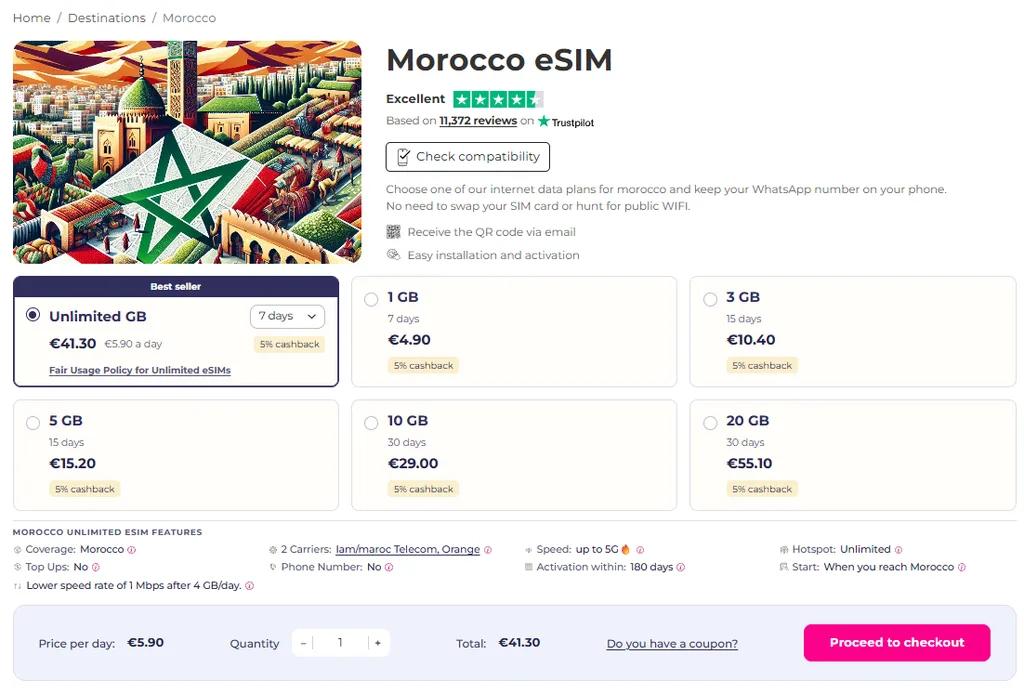
With an eSIM from www.quibity.com, you can:
- Install your data plan before you leave, then activate it from your phone’s network settings and get online the moment you arrive in Morocco
- Pick the data package that suits you, from local plans with 1GB to 50GB to the unlimited data plan, so you can browse worry-free and skip roaming charges!
- Get 24/7 support in all major languages
- Top up your data whenever you like, straight from your personal account
When to go and what to know before you leave
Spring (March to May) and fall (September to November) are generally the best times to visit Morocco, especially if you’re doing the imperial cities circuit. Temperatures are more pleasant then, both in the cities and in the desert. Summer can get very hot, as you’d expect, especially in the Sahara. Winter is mild in the cities, but desert nights can be much colder.
Allow at least 7–10 days to complete the imperial cities circuit. The best ways to get around:
- train is a convenient way to travel between the main cities;
- a car or an organized tour is usually the better choice if you want to reach the desert and more remote areas.
The local currency is the Moroccan dirham (MAD). Moroccan Arabic is the most widely spoken language, French is very common, and you’ll mostly hear English in tourist areas. Looking for more things to do in Morocco? Read our complete guide to Morocco.
FAQs
How many imperial cities are there in Morocco?
The traditional circuit covers four imperial cities: Marrakech, Fez, Rabat and Meknes.
How long do you need to visit the imperial cities of Morocco?
Allow at least 7–10 days for the full itinerary. If you’re adding a desert tour, it’s best to plan a couple of extra days.
Which is the most beautiful imperial city in Morocco?
They’re all stunning, but each one offers something different. Choose Marrakech for color and buzz, Fez if you love history and want to dig into Moroccan traditions, Rabat for a city that blends old and new, and Meknes for a calmer, more authentic experience.
Is it worth adding the Sahara to the imperial cities circuit?
Absolutely! The desert is a one-of-a-kind experience and a striking contrast to the cities. It shows you a whole other side of Morocco: wild landscapes, silence and nomadic traditions.
Do you need internet when traveling in Morocco?
A mobile connection is a good idea for finding your way, staying in touch and planning your travel day to day. With an eSIM, you’ll arrive in place already connected and aren’t going to waste time buying and registering a local SIM. Check out Quibity’s eSIM plans for Morocco here.